Minnesota Affidavit of Execution
Have a witness swear that they watched a document being signed, so the signature can be proven later without tracking the witness down.
Includes 30 days of edits
- 5 to 20 minutes
- Print-ready PDF
- Tailored to Minnesota
Affidavit of Execution rules in Minnesota
States differ on when proof by a subscribing witness can be used in place of a signer's own notarized acknowledgment, and on what the witness must state. Some states allow a recorder to accept a document proven by a witness's sworn statement, while others accept it only in limited circumstances or require the witness to appear before a specific officer. Wills follow separate rules, and many states have their own self-proving affidavit for them. This document names your selected state in the venue and perjury statement, records the facts most commonly required, and uses a general jurat, but you should confirm what the receiving office or court will accept.
When you create this document for Minnesota, the questionnaire uses Minnesota as the governing law and adds wording that defers to Minnesota requirements where they apply. Laws change, so confirm current rules with official Minnesota sources or a local attorney for anything critical.
What is an Affidavit of Execution?
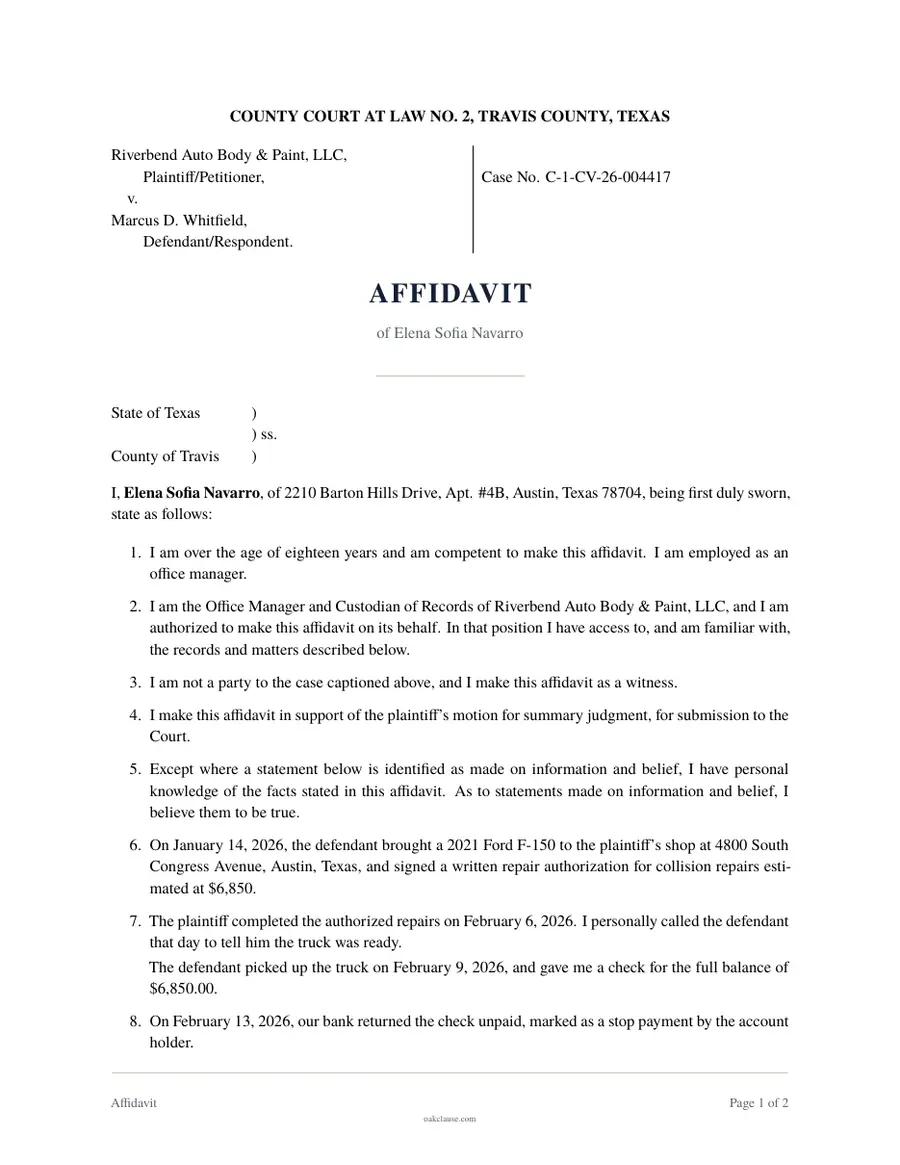
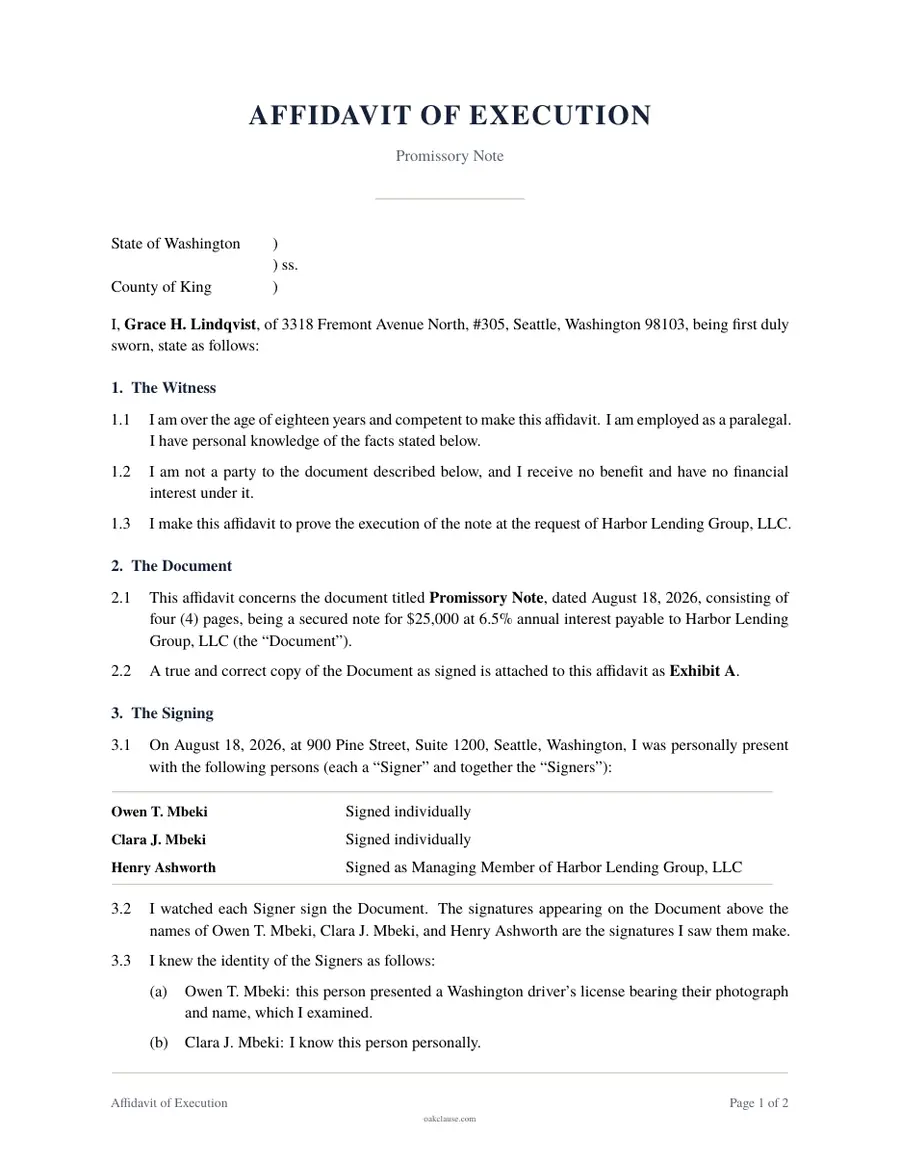
An affidavit of execution, also called a proof of execution or witness affidavit, is a sworn statement by a person who watched someone sign a document. The witness confirms who signed, when and where it happened, how they knew the signer's identity, and that the signer appeared to act willingly.
The affidavit matters when a signature might be questioned later, or when an office or court needs proof that a document was properly signed. It is often used when a signer could not appear before a notary themselves, when a document was witnessed but not notarized, or when a title company, recorder, bank or court asks for evidence of execution after the fact.
Because the witness swears to the facts in front of a notary, the affidavit can stand in for live testimony in many situations. This document identifies the document signed, lists each signer, records how the witness identified them, and includes the witness's signature and a notary jurat.
When to use it
- You witnessed a contract, deed, promissory note or other document and someone needs your sworn confirmation.
- A signer could not appear before a notary, and a recorder or institution will accept proof by a subscribing witness.
- A title company or bank has asked for proof that an older document was actually signed by the named person.
- A party expects that a signature may be disputed and wants a sworn record made while memories are fresh.
- A court or agency needs evidence of how and when a document was signed.
What is included
- State and county venue heading
- Witness identification and competency statement
- Description of the document, its date and page count
- Each signer and the capacity in which they signed
- Date, place and manner of signing
- How the witness identified each signer
- Observations about the signer's capacity and free will
- Other witnesses present and the witness's own subscription
- Statement that the witness has no interest in the document
- Witness signature with notary jurat
How to make your Affidavit of Execution
Answer the questions
Tell us about the parties and the terms you want. Most documents take about 5 to 20 minutes.
Review the preview
Check the draft as you go and change any answer. The document updates instantly.
Download, sign and keep a copy
Download a print-ready PDF, sign it with the other parties, and give everyone a copy.
Affidavit of Execution in another state
Back to the general affidavit of execution page51 states shown
- ALAlabama
- AKAlaska
- AZArizona
- ARArkansas
- CACalifornia
- COColorado
- CTConnecticut
- DEDelaware
- DCDistrict of Columbia
- FLFlorida
- GAGeorgia
- HIHawaii
- IDIdaho
- ILIllinois
- INIndiana
- IAIowa
- KSKansas
- KYKentucky
- LALouisiana
- MEMaine
- MDMaryland
- MAMassachusetts
- MIMichigan
- MNMinnesota
- MSMississippi
- MOMissouri
- MTMontana
- NENebraska
- NVNevada
- NHNew Hampshire
- NJNew Jersey
- NMNew Mexico
- NYNew York
- NCNorth Carolina
- NDNorth Dakota
- OHOhio
- OKOklahoma
- OROregon
- PAPennsylvania
- RIRhode Island
- SCSouth Carolina
- SDSouth Dakota
- TNTennessee
- TXTexas
- UTUtah
- VTVermont
- VAVirginia
- WAWashington
- WVWest Virginia
- WIWisconsin
- WYWyoming
Frequently asked questions
What is an affidavit of execution?
It is a sworn statement by someone who saw a document being signed. The witness confirms the identity of the signer, the date and place of signing, and that the signer appeared to sign voluntarily. It helps prove the document is genuine if anyone questions it later.
Who can be the witness?
Generally an adult who watched the signing and is competent to testify. It is best if the witness has no financial interest in the document, such as not being a party or a beneficiary, because an interested witness may be challenged. Some states set specific rules, so check before relying on a particular witness.
Is this the same as a notary acknowledgment?
No. In an acknowledgment, the signer personally appears before a notary and confirms their own signature. In an affidavit of execution, a witness swears to what they saw. Some offices accept a witness's proof when the signer cannot acknowledge the document themselves.
Can I use this for a will?
Wills have their own witnessing rules. Many states provide a self-proving affidavit signed by the testator and witnesses before a notary, and some require specific wording. If you need to prove a will, use the procedure your state's probate court requires or speak with an estate attorney.
Does the witness need to have signed the original document?
Not necessarily. Some proof procedures require a subscribing witness, meaning someone who also signed the document as a witness, while in other situations anyone who saw the signing can give a sworn statement. The questionnaire asks whether the witness signed the original.
How long after the signing can the affidavit be made?
It can be made at any time the witness can still recall the facts, but it is most reliable when made soon after the signing. If time has passed, the witness should only include details they remember clearly.
Does the affidavit need to be notarized?
Yes. The witness must sign the affidavit in front of a notary or other officer authorized to administer oaths, who completes the jurat. Without the oath, the statement is not an affidavit.
Should the signed document be attached?
Attaching a copy makes it clear which document the witness is talking about, which is especially helpful when there are several versions or similar documents. The questionnaire lets you note that a copy is attached as an exhibit.
More Minnesota documents
Other documents people prepare for Minnesota, each with the state’s rules where we have checked them.
All Minnesota documents and rules