Louisiana Affidavit of Residency
Confirm under oath where you live and since when, for a school, agency, employer or other institution that needs proof of address.
Includes 30 days of edits
- 5 to 20 minutes
- Print-ready PDF
- Tailored to Louisiana
Affidavit of Residency rules in Louisiana
Every state and many local institutions set their own standards for proving residency. School districts, state universities, motor vehicle agencies and benefit programs each decide what counts as residence, how long a person must have lived somewhere, and which documents they accept, and some require their own official form. Making a false residency statement can lead to penalties under state law, such as repayment of tuition or prosecution for false swearing. This document names your selected state in the venue and the perjury statement and is written to work alongside an institution's requirements, but it does not replace a form the institution insists on.
When you create this document for Louisiana, the questionnaire uses Louisiana as the governing law and adds wording that defers to Louisiana requirements where they apply. Laws change, so confirm current rules with official Louisiana sources or a local attorney for anything critical.
What is an Affidavit of Residency?
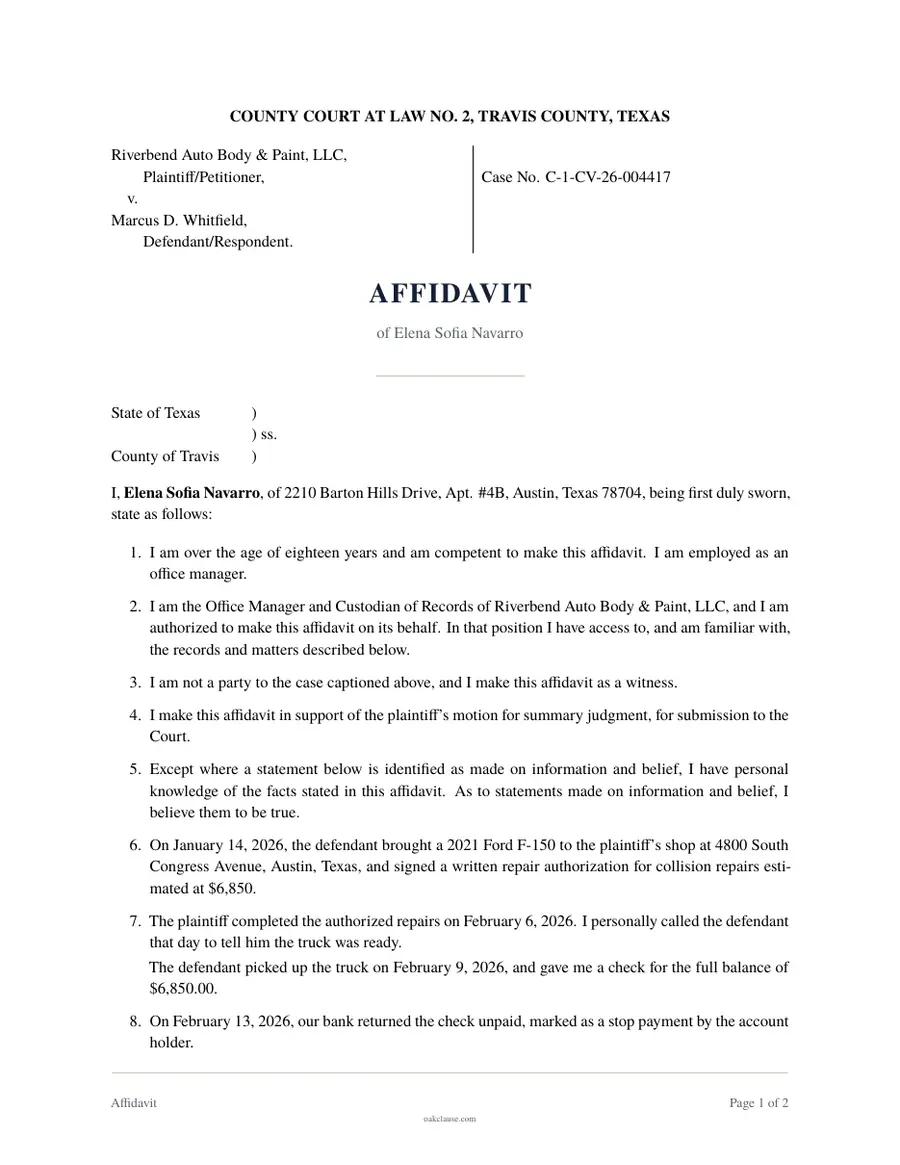
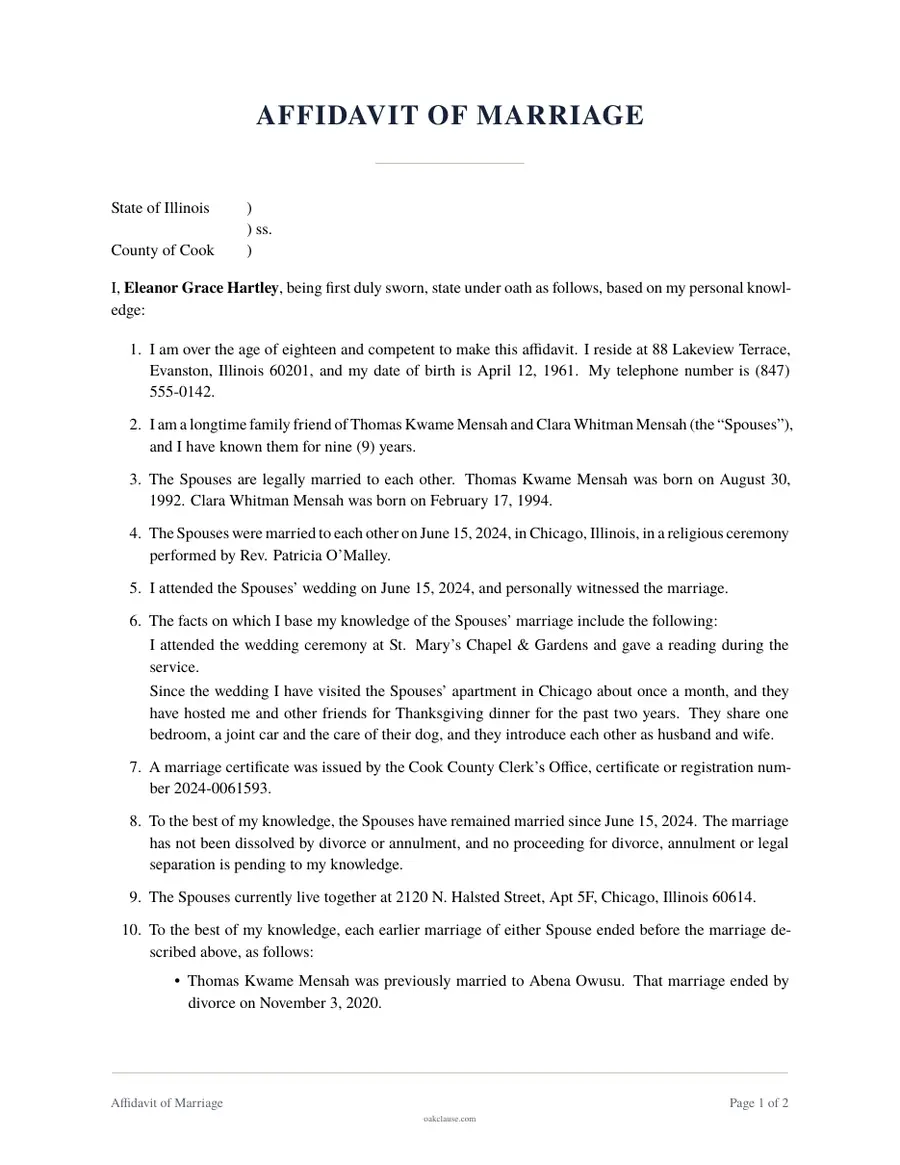
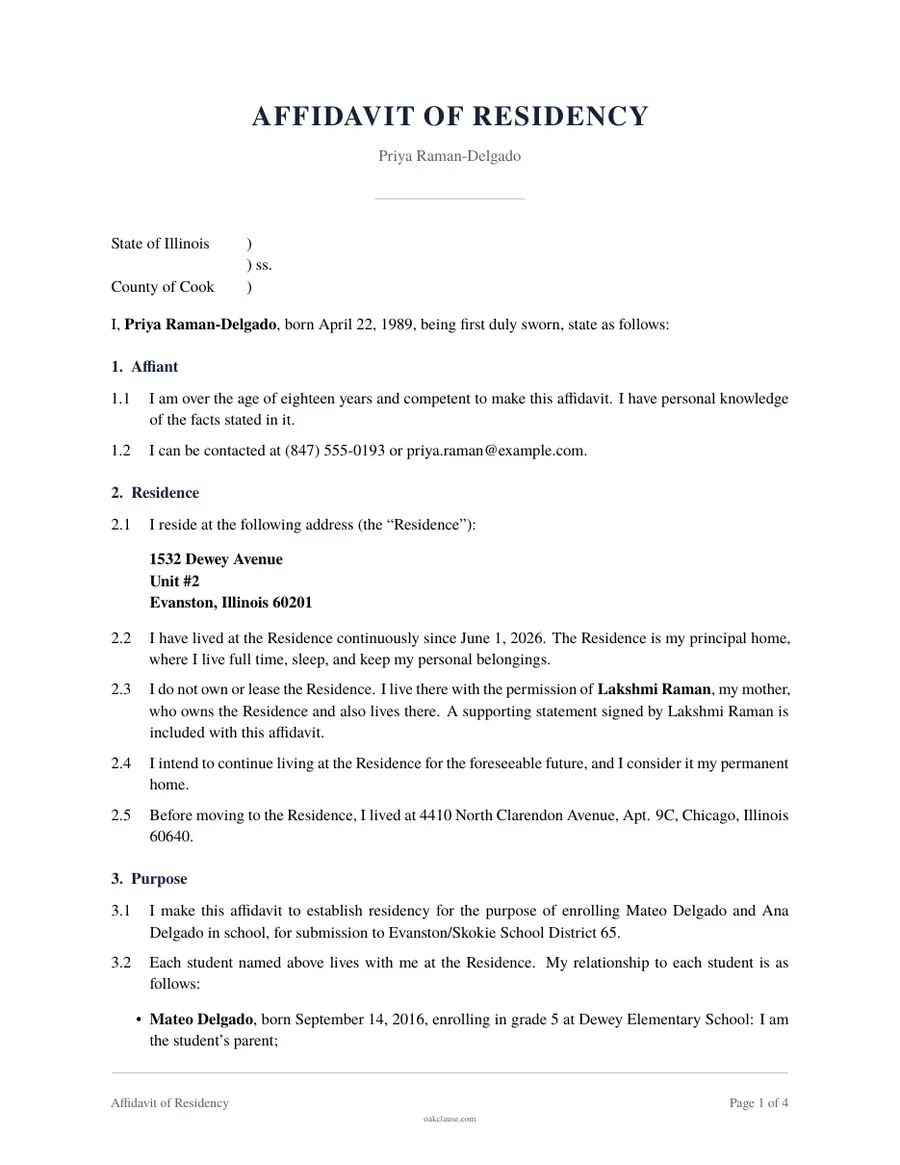
An affidavit of residency is a sworn statement in which a person confirms their home address, how long they have lived there, and often who lives with them. It is signed in front of a notary, so it carries more weight than an ordinary letter or form.
Institutions ask for this kind of affidavit when the usual proof of address is missing or does not tell the whole story. A family that has moved in with relatives may not have a lease or utility bill in their own name; a student may need to show residence for tuition purposes; and an agency may need a sworn statement to support an application for a license or benefit.
When the person does not own or rent the home, many schools and agencies also want a statement from the homeowner or leaseholder confirming the living arrangement. This document can include that supporting statement, with its own signature and jurat, along with a list of household members and the proof of residence attached.
When to use it
- You are enrolling a child in a public school district and need to prove you live within its boundaries.
- You live with family or friends and have no lease, deed or utility bill in your own name.
- A college, licensing office or government program has asked for sworn proof of residence.
- An employer, bank or insurer needs confirmation of your address and how long you have lived there.
- You are applying for a benefit or permit that is available only to residents of a particular area.
What is included
- State and county venue heading
- Affiant identity, date of birth and contact details
- Current residential address and move-in date
- Whether the home is owned, rented or shared with another household
- Optional prior address
- Purpose and receiving institution
- List of household members, including children
- Supporting documents attached as proof
- Intent to remain and duty to report changes
- Affiant jurat plus optional homeowner or leaseholder statement
How to make your Affidavit of Residency
Answer the questions
Tell us about the parties and the terms you want. Most documents take about 5 to 20 minutes.
Review the preview
Check the draft as you go and change any answer. The document updates instantly.
Download, sign and keep a copy
Download a print-ready PDF, sign it with the other parties, and give everyone a copy.
Affidavit of Residency in another state
Back to the general affidavit of residency page51 states shown
- ALAlabama
- AKAlaska
- AZArizona
- ARArkansas
- CACalifornia
- COColorado
- CTConnecticut
- DEDelaware
- DCDistrict of Columbia
- FLFlorida
- GAGeorgia
- HIHawaii
- IDIdaho
- ILIllinois
- INIndiana
- IAIowa
- KSKansas
- KYKentucky
- LALouisiana
- MEMaine
- MDMaryland
- MAMassachusetts
- MIMichigan
- MNMinnesota
- MSMississippi
- MOMissouri
- MTMontana
- NENebraska
- NVNevada
- NHNew Hampshire
- NJNew Jersey
- NMNew Mexico
- NYNew York
- NCNorth Carolina
- NDNorth Dakota
- OHOhio
- OKOklahoma
- OROregon
- PAPennsylvania
- RIRhode Island
- SCSouth Carolina
- SDSouth Dakota
- TNTennessee
- TXTexas
- UTUtah
- VTVermont
- VAVirginia
- WAWashington
- WVWest Virginia
- WIWisconsin
- WYWyoming
Frequently asked questions
What is an affidavit of residency used for?
It is used to prove where someone lives when ordinary documents, such as a lease or utility bill, are unavailable or need backing up. Common uses include school enrollment, in-state tuition applications, government programs, licenses and employment or banking paperwork.
Does an affidavit of residency need to be notarized?
Yes. It is a sworn statement, so the affiant signs it in front of a notary or another officer who can administer oaths. If a homeowner or leaseholder also signs a supporting statement, they should sign in front of a notary too.
I live with relatives. Who should sign?
You sign as the affiant because you are the one stating where you live. Many schools and agencies also want the homeowner or leaseholder to confirm the arrangement. Choose the option for living with another household, and the document adds a supporting statement for that person to sign.
What documents should I attach?
Attach whatever the institution accepts, such as a utility bill, lease, mortgage or property tax statement, government ID showing your address, bank statement or mail from a government agency. If you live with someone else, institutions often ask for that person's proof of residence instead of yours.
Is residency the same as domicile?
Not quite. Residence usually means where you actually live, while domicile means your permanent home that you intend to return to. Some purposes, like in-state tuition or voting, depend on domicile. The document lets you state that you intend to remain at the address, which speaks to domicile.
What happens if I give false information?
A false affidavit can be treated as perjury or false swearing under state law. In school cases, families may also be required to pay tuition for the time the child attended without being eligible. Only sign if every statement is true.
Can a school or agency refuse my affidavit?
Yes. Each institution sets its own proof-of-residence rules and may require its own form, home visits or additional documents. Ask the institution what it accepts before you sign.
What if I move after signing?
The affidavit is accurate only as of the day you sign it. The document includes a promise to notify the receiving institution if your address changes, and many schools and programs require that notice.
More Louisiana documents
Other documents people prepare for Louisiana, each with the state’s rules where we have checked them.
All Louisiana documents and rules