New Hampshire Affidavit of Correction
Fix a typo, wrong name or incorrect legal description in a recorded deed, title or other record with a sworn statement that explains exactly what was wrong and what is right.
Includes 30 days of edits
- 5 to 20 minutes
- Print-ready PDF
- Tailored to New Hampshire
Affidavit of Correction rules in New Hampshire
Whether a recorded document can be fixed with an affidavit of correction, and what kinds of errors qualify, depends on state law and on the policies of the county recorder or other office that keeps the record. Some states have a statute that expressly allows corrective affidavits for clerical errors and limit who may sign them, such as the person who drafted the original or a party to it; others expect a corrective deed signed by the original parties. Recording offices also set formatting rules, such as margins, a return address and a preparer statement. This document names your selected state, describes the correction as clerical only, lets you add a consent signed by the other parties, and includes a recording block, but you should confirm the local requirements before recording.
When you create this document for New Hampshire, the questionnaire uses New Hampshire as the governing law and adds wording that defers to New Hampshire requirements where they apply. Laws change, so confirm current rules with official New Hampshire sources or a local attorney for anything critical.
What is an Affidavit of Correction?
An affidavit of correction, sometimes called a scrivener's affidavit or corrective affidavit, is a sworn statement used to fix a clerical mistake in a document that has already been signed or recorded. Instead of redoing the whole transaction, the person who knows about the error swears to what the original document says, what it should have said, and how the mistake happened.
Common examples include a misspelled name, a transposed lot or parcel number, a wrong date, an incorrect vehicle identification number, or a legal description that leaves out a word. Once recorded alongside the original, the affidavit gives title examiners, lenders and government offices a clear public record of the correction.
An affidavit of correction is meant for minor, clerical errors. It is generally not a substitute for a new deed when the parties want to change who owns the property, add or remove land, or change the terms of the deal. Recorders, motor vehicle agencies and title companies each have their own rules about what they will accept, so confirm the requirements of the office that holds the record before you sign.
When to use it
- A recorded deed misspells a buyer's or seller's name or uses the wrong middle initial.
- The legal description, lot number or parcel number in a deed or mortgage contains a typo.
- A vehicle title or bill of sale lists an incorrect VIN, odometer reading or date.
- A title company or lender has asked for a sworn explanation of a discrepancy in a document.
- You prepared a document and need to correct your own drafting error after it was signed.
What is included
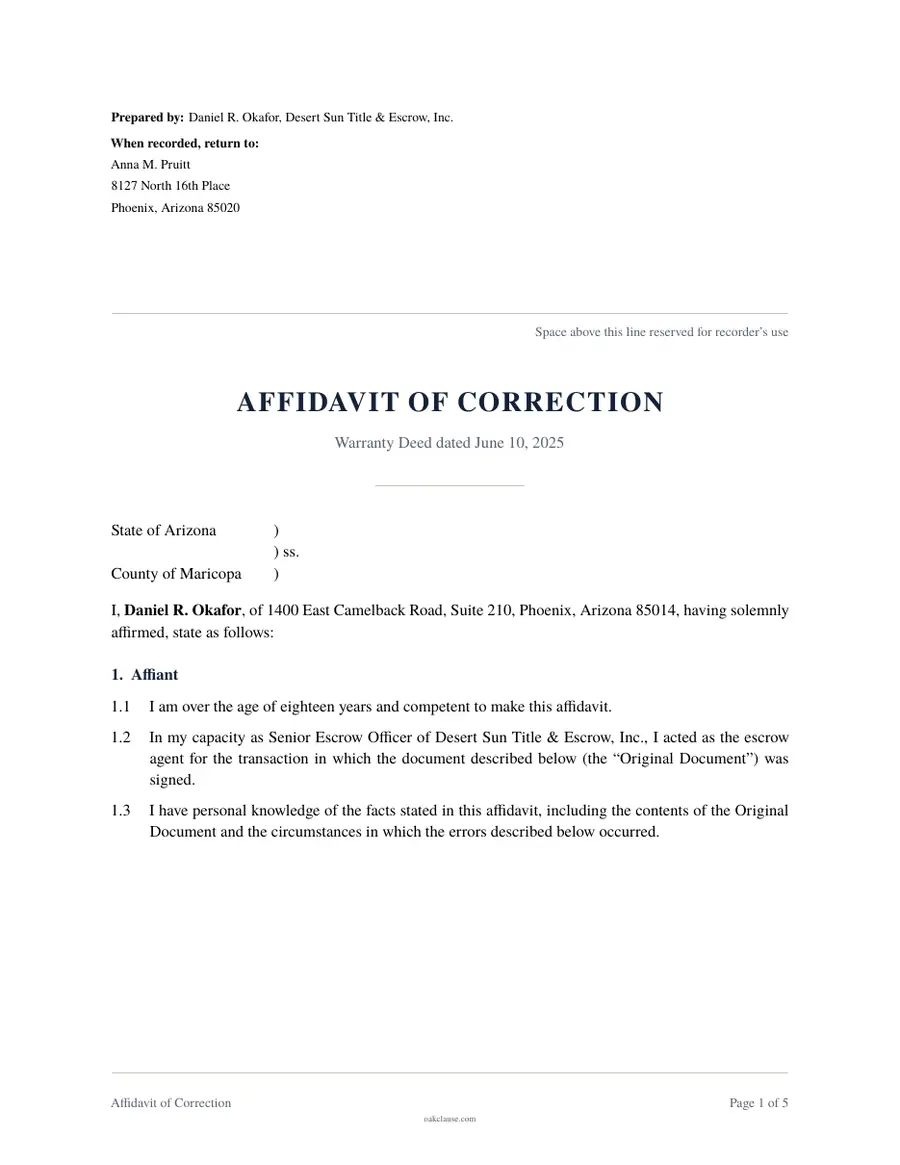
- State and county venue heading with recording information
- Affiant identity and the basis of their knowledge
- Full identification of the original document and where it is recorded
- Table of each error and its correction
- Explanation of how the error occurred
- Statement that the correction is clerical and changes nothing else
- Optional consent and joinder of the other parties
- Prepared-by and return-to block for recording
- Affiant signature with notary jurat
- Notary acknowledgment for consenting parties
How to make your Affidavit of Correction
Answer the questions
Tell us about the parties and the terms you want. Most documents take about 5 to 20 minutes.
Review the preview
Check the draft as you go and change any answer. The document updates instantly.
Download, sign and keep a copy
Download a print-ready PDF, sign it with the other parties, and give everyone a copy.
Affidavit of Correction in another state
Back to the general affidavit of correction page51 states shown
- ALAlabama
- AKAlaska
- AZArizona
- ARArkansas
- CACalifornia
- COColorado
- CTConnecticut
- DEDelaware
- DCDistrict of Columbia
- FLFlorida
- GAGeorgia
- HIHawaii
- IDIdaho
- ILIllinois
- INIndiana
- IAIowa
- KSKansas
- KYKentucky
- LALouisiana
- MEMaine
- MDMaryland
- MAMassachusetts
- MIMichigan
- MNMinnesota
- MSMississippi
- MOMissouri
- MTMontana
- NENebraska
- NVNevada
- NHNew Hampshire
- NJNew Jersey
- NMNew Mexico
- NYNew York
- NCNorth Carolina
- NDNorth Dakota
- OHOhio
- OKOklahoma
- OROregon
- PAPennsylvania
- RIRhode Island
- SCSouth Carolina
- SDSouth Dakota
- TNTennessee
- TXTexas
- UTUtah
- VTVermont
- VAVirginia
- WAWashington
- WVWest Virginia
- WIWisconsin
- WYWyoming
Frequently asked questions
What kinds of errors can an affidavit of correction fix?
It is designed for clerical or typographical mistakes, such as misspelled names, transposed numbers, wrong dates or an incomplete legal description. It is generally not used to make substantive changes, such as conveying different land, adding a new owner or changing the price. Those usually call for a new or corrective deed.
Who can sign an affidavit of correction?
Usually someone with personal knowledge of the error, such as the person who drafted the original document, the closing agent, or one of the original parties. Some states limit who may sign, so check your state's rules and the recorder's requirements.
Is an affidavit of correction the same as a corrective deed?
No. A corrective deed is a new deed signed by the original grantor that restates the conveyance with the error fixed. An affidavit of correction is a sworn statement explaining the error. Some offices accept either for small errors, while others require a corrective deed for anything that affects the property description.
Do the other parties to the original document need to sign?
Not always, but it often helps. Having the other parties sign a consent shows that everyone agrees the correction reflects what was originally intended, and some recorders and title companies require it. The questionnaire lets you add a consent section with an acknowledgment for each party.
Where do I record an affidavit of correction?
Record it with the same office that recorded the original document, typically the county recorder, register of deeds or clerk in the county where the property is located. For a vehicle title, contact your state's motor vehicle agency, which may have its own correction form.
Does the correction take effect from the original date?
The affidavit states that the parties intend the correction to relate back to the date of the original document. Whether it actually does, and how it affects third parties who relied on the record, is a matter of state law.
Does an affidavit of correction need to be notarized?
Yes. As a sworn statement, it must be signed in front of a notary or other officer who administers oaths, and documents offered for recording almost always need a notarial certificate. Any consenting parties should also sign before a notary.
What should I attach to the affidavit?
Many people attach a copy of the original recorded document so the reader can compare it with the correction. Some recorders prefer that you not attach the full original, so ask before recording.
More New Hampshire documents
Other documents people prepare for New Hampshire, each with the state’s rules where we have checked them.
All New Hampshire documents and rules